Notes, projects and other thoughts
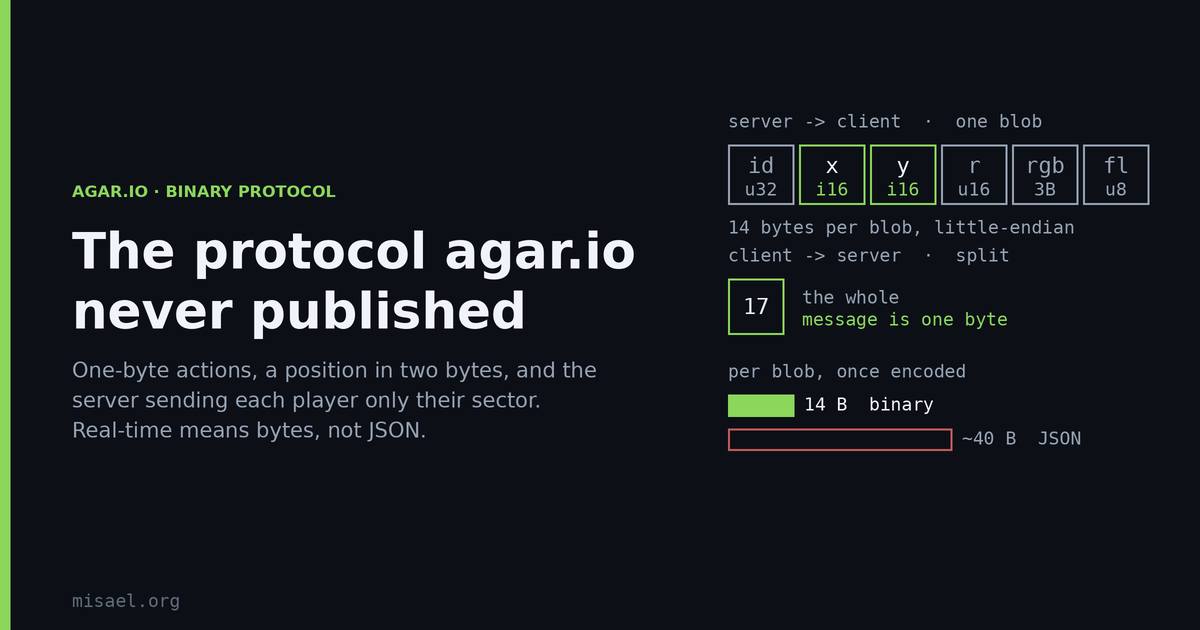
Open devtools on agar.io and the Network tab is eerily still: no polling, no JSON endpoint, just one WebSocket handing you columns of hex. This is what those bytes say. One-byte opcodes whose meaning flips depending on which direction they’re travelling, a node record with every field at a fixed offset and not a character of it spelling out ‘x’, little-endian everywhere with a DataView gotcha that folds a whole frame into a diagonal smear, and the decision that matters most: the server holds the entire world and ships each player only their sector, so the packet scales with a screen instead of with the population. Years ago I hit the same wall with a Tornado server and JSON, and a fire took the code before I could brag about the fix.
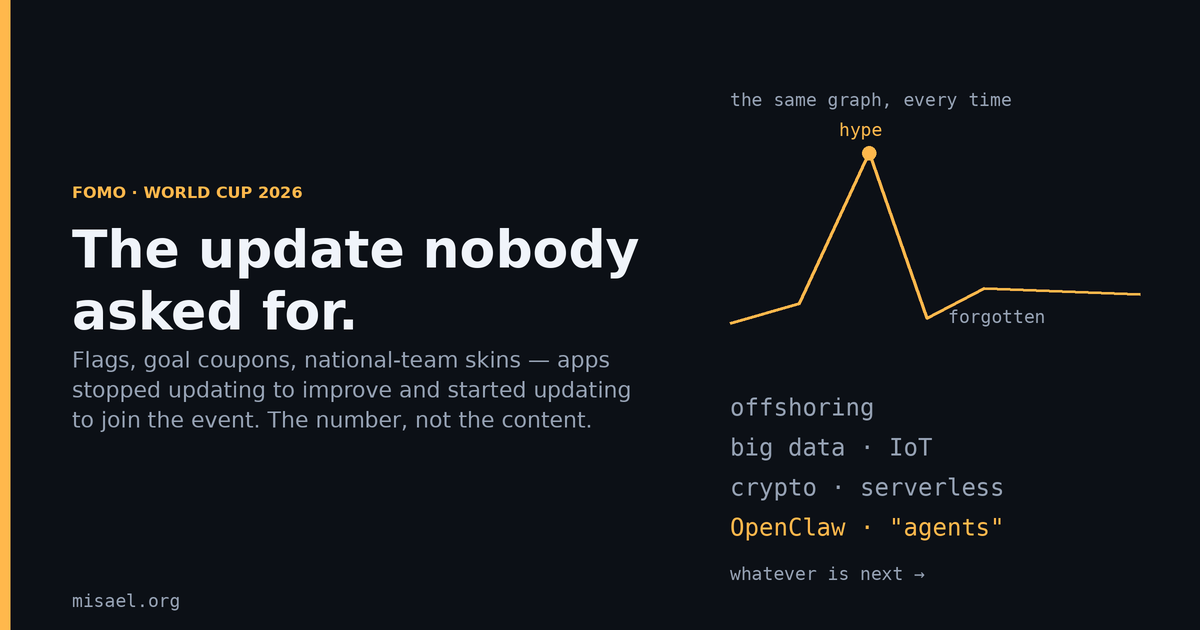
Apps no longer update to improve — they update to join the event. A walk, with real and linked numbers, from the 2026 World Cup update frenzy to how the FOMO that powers it was designed and mass-produced — and the hype cycle that keeps getting shorter, from offshoring to AI ‘agents’.
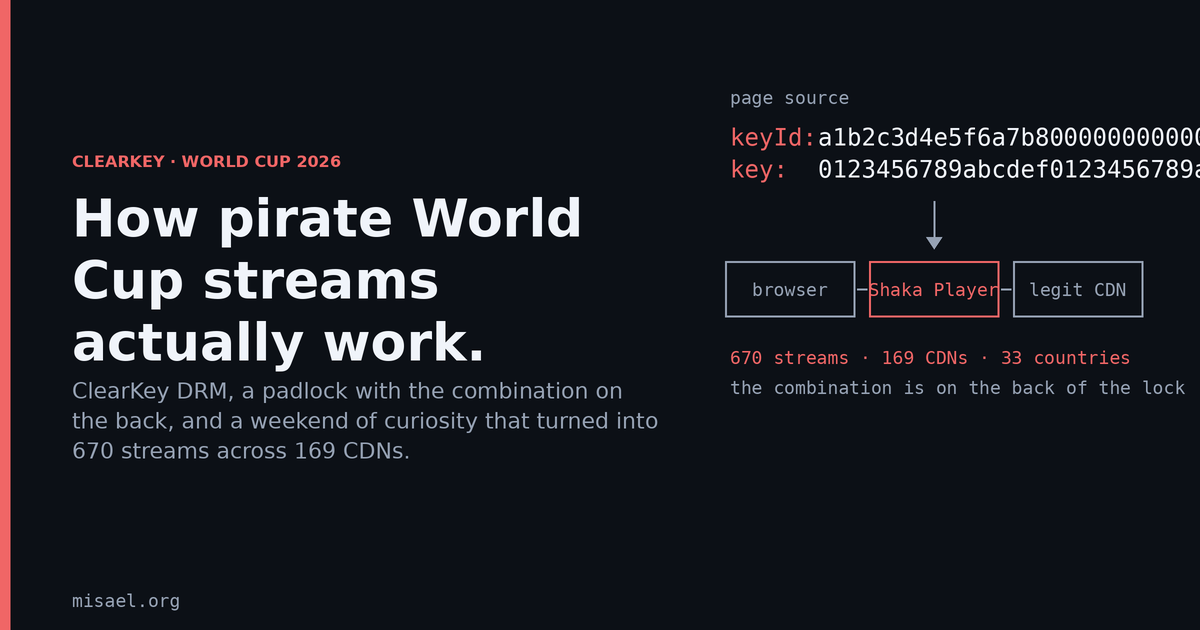
I went looking for how pirate streaming sites and Android apps actually serve the World Cup. The DRM keys were in the HTML, the app encryption was AES-ECB, and the ’license server’ was a URL with the key in the query string.
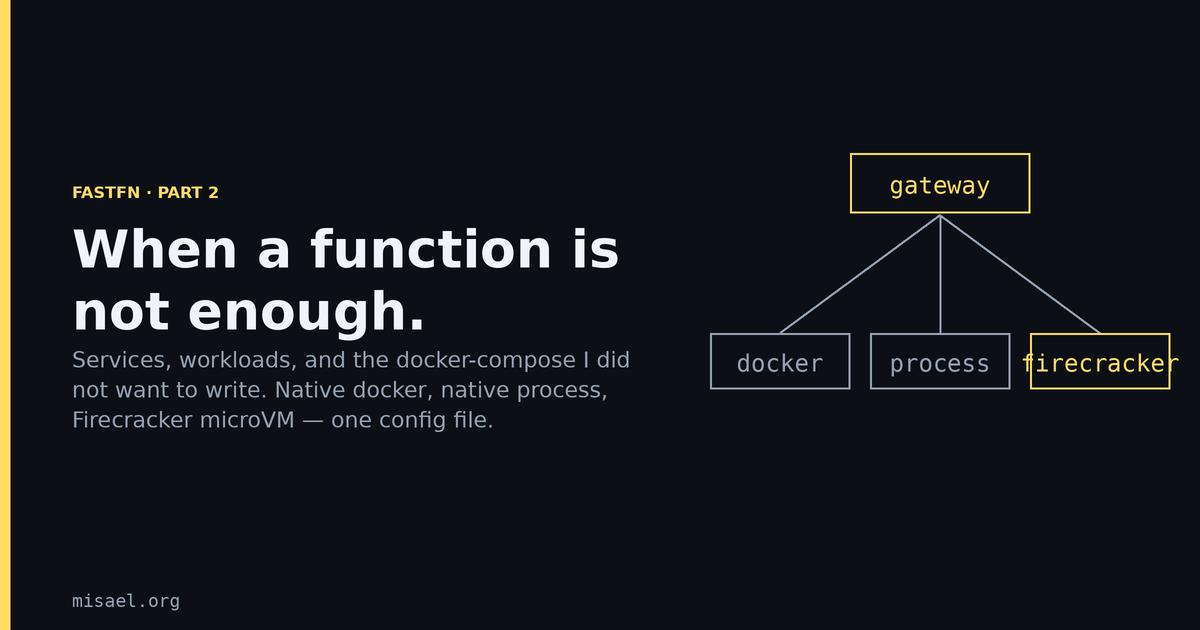
Functions are a great shape for request/response. They’re a terrible shape for a database. This is the part of fastfn where long-lived services joined the gateway — native docker, native process, Firecracker microVM — all behind one workload config.
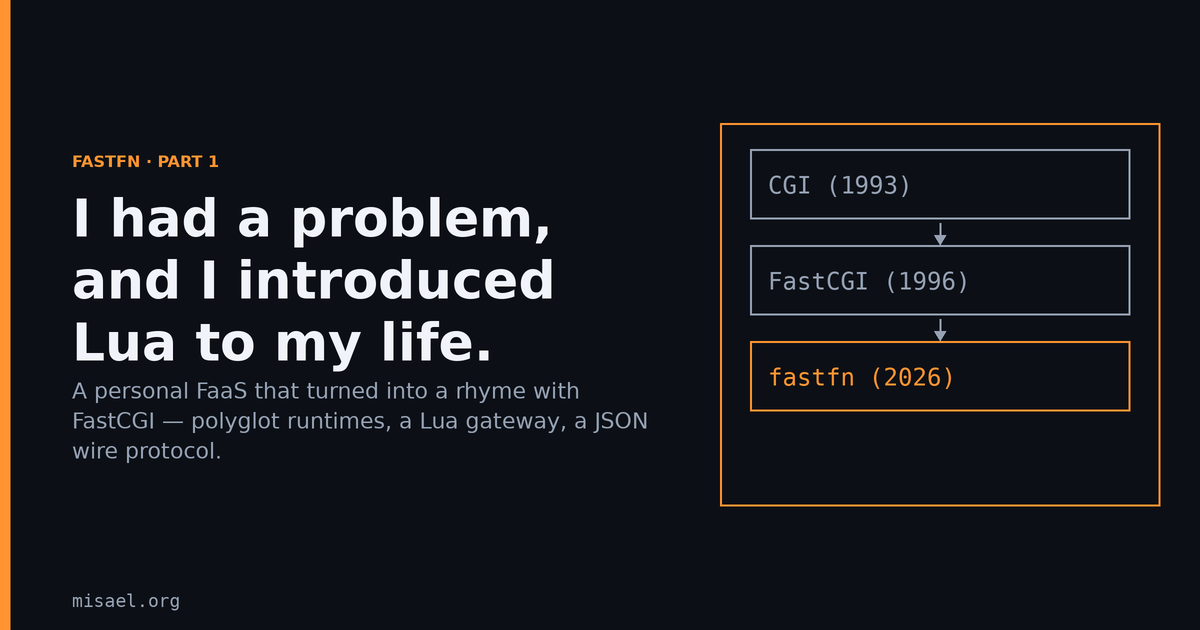
How building a personal FaaS turned into a rhyme with FastCGI — polyglot runtimes, a Lua gateway, and a JSON wire protocol. Part 1 covers the function side; Part 2 covers services.
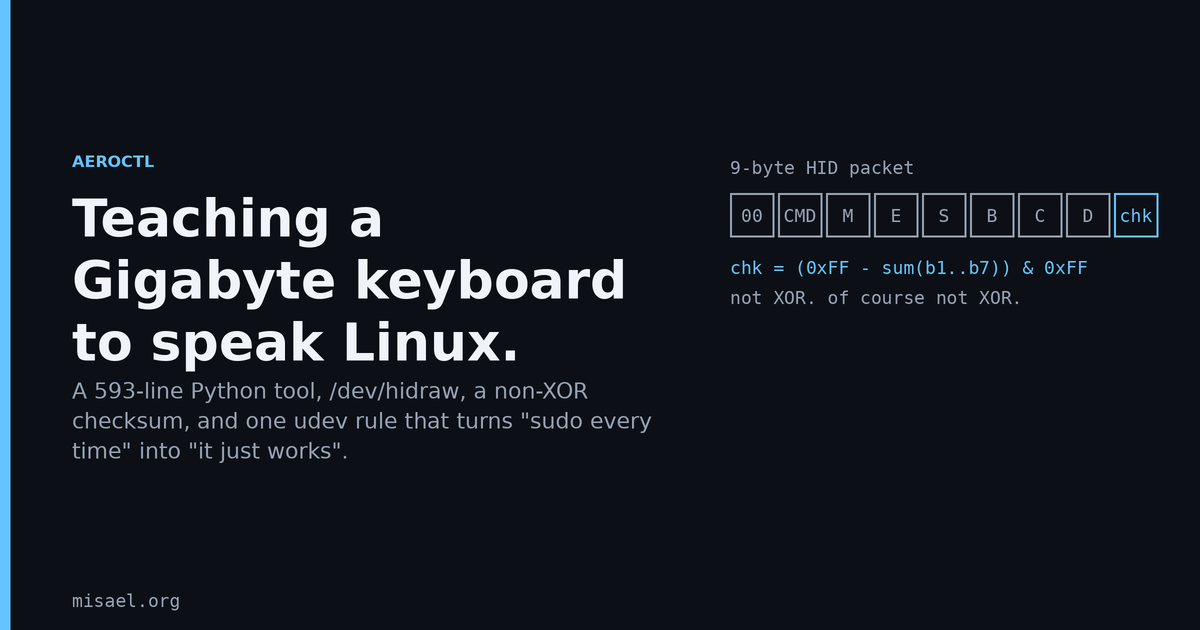
A Gigabyte Aero RGB keyboard, /dev/hidraw, a non-XOR checksum, and one udev rule that turns ‘sudo every time’ into ‘it just works’.
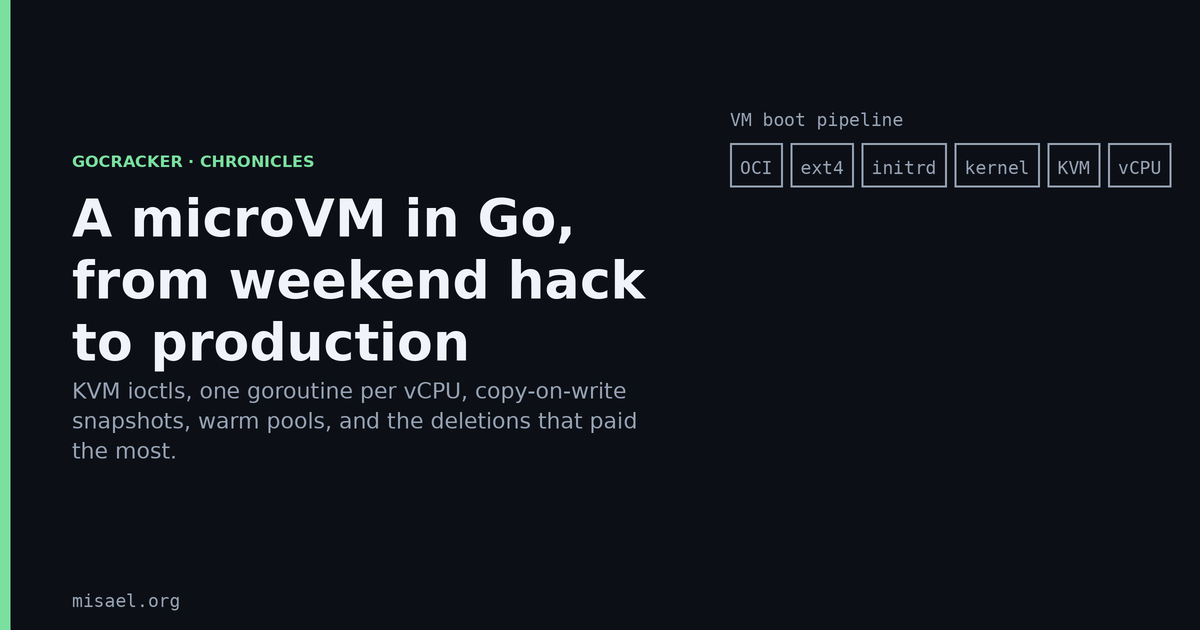
The whole gocracker story in one sitting: why Go, how KVM actually works, the concurrency bugs that nearly killed it, the performance work that brought cold boot under 200ms, and the production layer above it that almost killed itself silently.